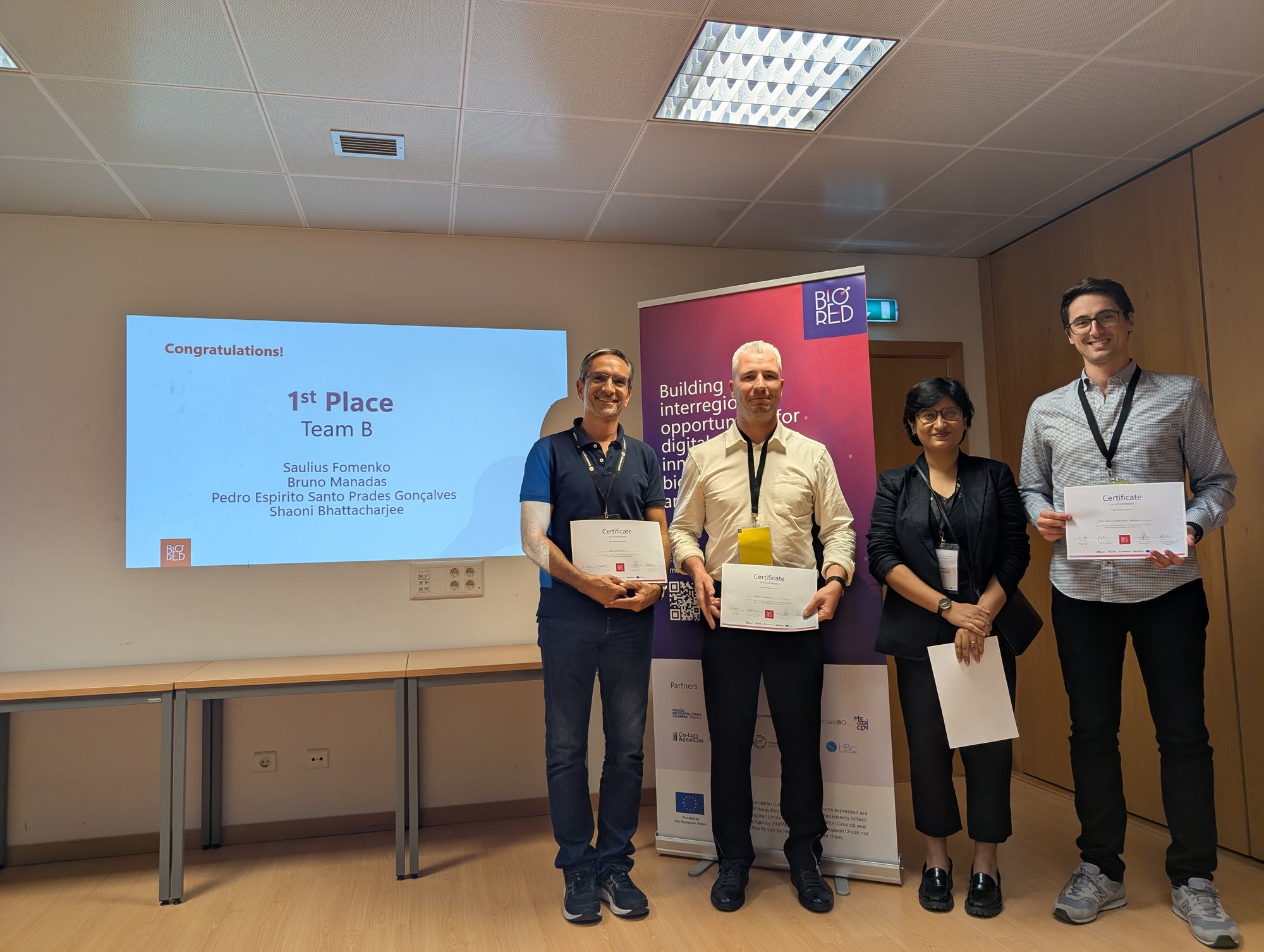
The Portugal event focused on advanced therapy medicinal products (ATMPs), from cell and gene therapy to manufacturing under good manufacturing practice (GMP). The RegBridge team chose to address regulatory preparation: how to support strong science with a clear plan for documentation and compliance.
The presentation focused on small biotech companies, university spin-offs, and academic and hospital manufacturing units. When regulatory knowledge and documentation are fragmented across sources and countries, preparation for clinical trials can involve substantial time and repeated work.
RegBridge proposes a digital regulatory passport for each product in development. In the concept presented, AI would help draft a product classification and an overview of applicable requirements, with lawyers and regulatory specialists reviewing and validating the material. The passport would be updated as requirements and the product development process change.
The team brought together Pedro Goncalves, Saulius Fomenko, Shaoni Bhattacharjee and Bruno Manadas. At the hackathon, they presented the concept, proposed workflow, business model and development roadmap. First place recognised that work and provided a starting point for testing the idea with potential users.
The development plan proposed combining expertise from Portugal and Lithuania, followed by expansion into France. Suggested first steps include interviews with target users, finding a legal-review partner and developing a product-classification demonstration. Pilots and funding applications were proposed as later stages.
RegBridge is presented at this stage as an early concept. Its performance and value still need to be tested with specialists and users. For LukoLab, the experience broadens its work in health innovation, from families’ information needs to the barriers faced by developers of new therapies.


Sources & context
Official event information · Biocant Park ↗